For Teachers
Quick, practical classroom tips for supporting every brain. Small changes help every child shine, and they help the whole class too.
- Give instructions out loud as well as in writing.
- Give children time to practise before reading aloud, or invite volunteers.
- Mark for ideas and content, not just spelling.
- Give key word lists and printed notes instead of copying from the board.
- Allow extra time, and use audio or read-aloud tools where you can.
- Use concrete materials: cubes, counters, number lines and money.
- Let children use a number line, hundred square or tables chart. It builds understanding.
- Teach one step at a time, with a worked example on the board.
- Give fewer questions rather than easier ones, and plenty of time instead of timed tests.
- Link maths to real life: shopping, cooking, sport and time.
- Seat the child near you and away from doors and windows.
- Break tasks into small chunks, with a short checklist.
- Build in movement: jobs, errands and short brain breaks.
- Use a visual timer, so the child can see how long is left.
- Praise effort straight away, and redirect quietly and positively.
- Offer alternatives to handwriting, like typing, voice notes or a scribe.
- Try pencil grips, sloped writing boards and wider-lined paper.
- Give handouts instead of copying from the board.
- Use visual checklists to help with organising bags and equipment.
- Allow extra time for PE, changing and practical tasks.
- Keep instructions short and give them one at a time.
- Check understanding by asking the child to show or tell you in their own words.
- Use pictures, gestures and objects alongside words.
- Pre-teach new topic words before the lesson.
- Give plenty of wait time before expecting an answer.
- Keep a predictable routine and show a visual timetable.
- Warn the child about changes as early as you can.
- Use clear, literal language: say exactly what you mean.
- Offer a quiet space, and keep noise, lighting and displays calm.
- Use the child's special interests to build motivation.
Tips that help everyone
- Show and tell. Say it, show it and write it: give every instruction in more than one way.
- Chunk it. Short tasks with clear steps work better than long ones.
- Calm classroom. A tidy, uncluttered room helps children focus.
- Strengths first. Notice and name what each child does well.
- Work together. Talk with parents and your school's special education teacher (SET), and share what works.
Using Spraoi in class
- Free, with no accounts needed. Open any game on the whiteboard or on tablets.
- Extra help settings. Read-aloud, bigger text, calmer colours, dyscalculia-friendly maths and a focus timer, all in Easy-read settings.
- Matched to the curriculum. Every game lists the Irish curriculum strand it covers.
- Printables. Wall charts, the Dyscalculia Maths Toolkit and the ADHD Brain-Break Pack are in the Spraoi shop.
Printables for the classroom
Wall charts, guides and packs ready to print for your classroom, SET room or learning support.
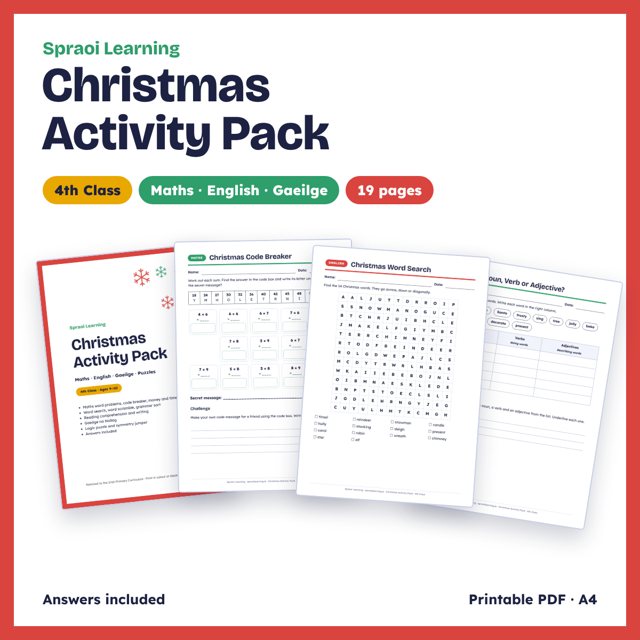
Christmas Activity Pack
Maths, English and Gaeilge Christmas activities matched to the Irish curriculum. Answers included.
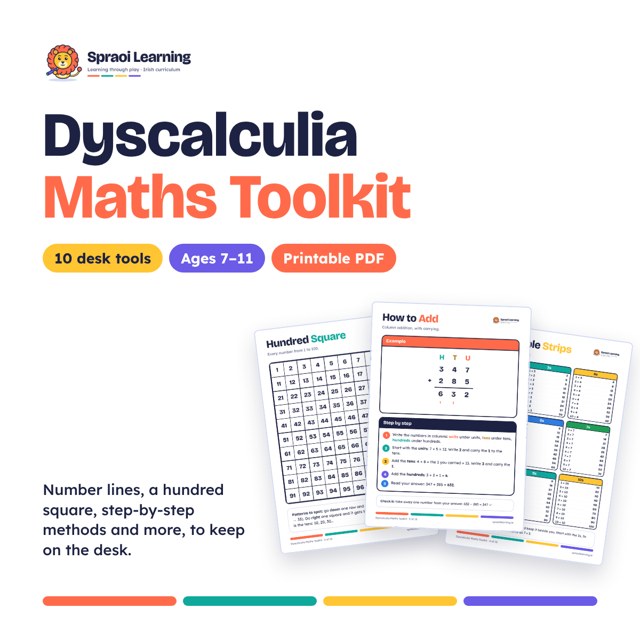
Dyscalculia Maths Toolkit
Number lines, a hundred square, a place value mat, times table strips and step-by-step methods to keep on the desk.
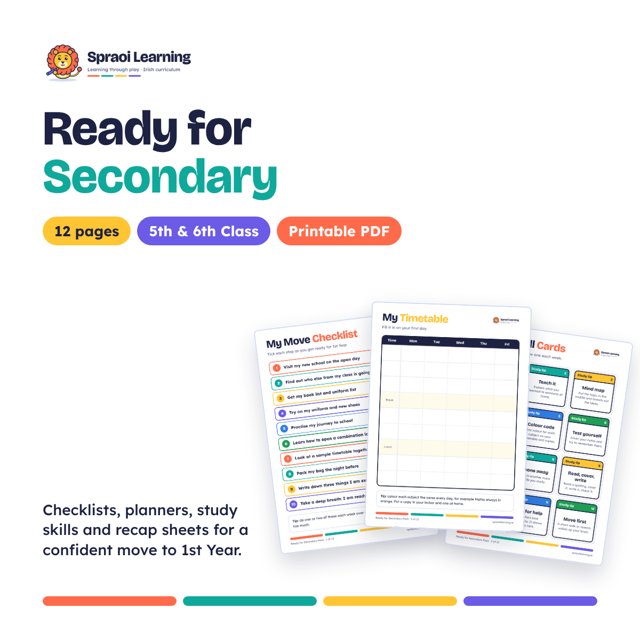
Ready for Secondary
Checklists, a timetable and locker planner, study skill cards, a strengths page and maths and English recap sheets for a confident move to 1st Year.
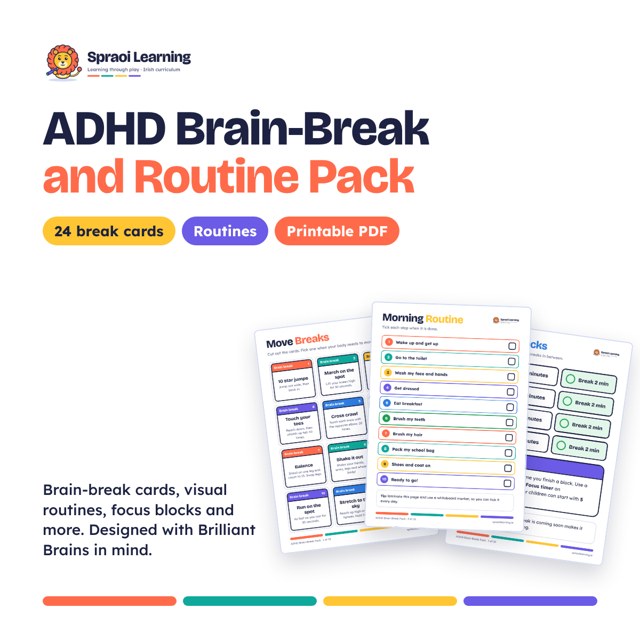
ADHD Brain-Break and Routine Pack
Move and calm brain-break cards, visual routines, a homework helper, focus blocks, a calm plan and a star chart.
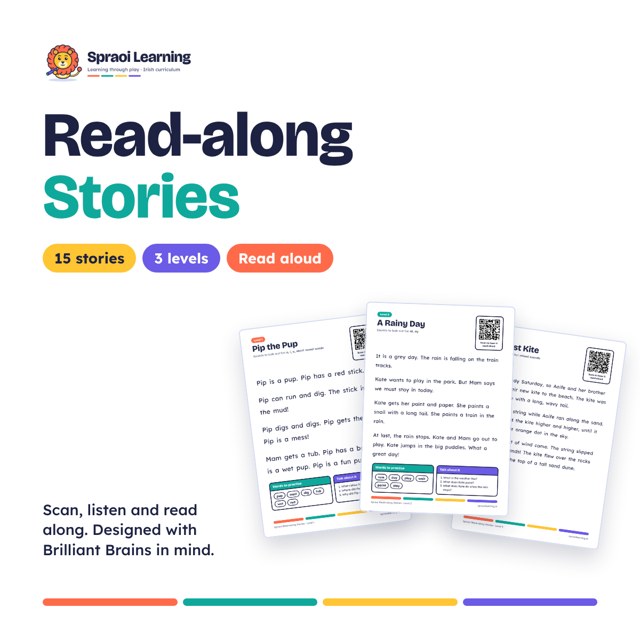
Read-along Stories
Printable decodable stories with a QR code on every story to hear it read aloud, with each word lighting up.
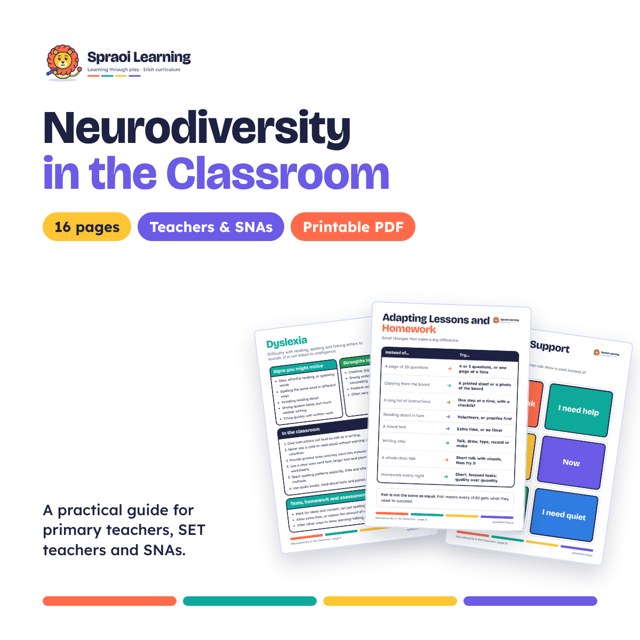
Neurodiversity in the Classroom
A practical, positive guide for teachers and SNAs: strategies, checklists, Irish supports and printable support cards.
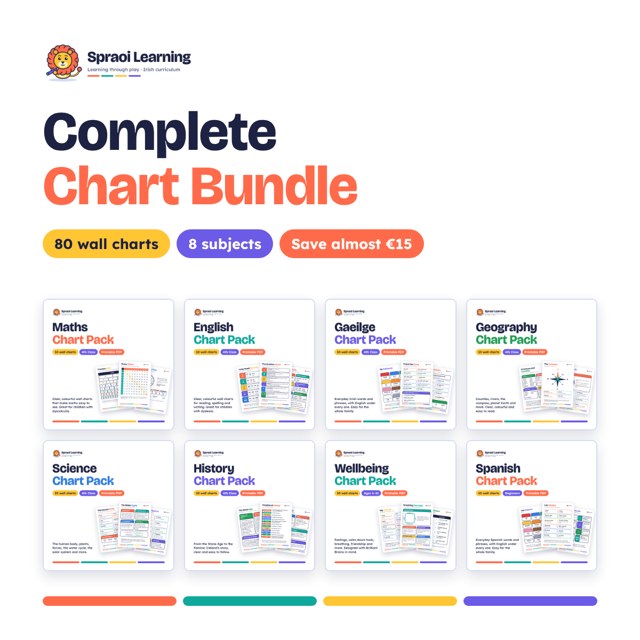
Complete Chart Bundle
All 8 chart packs in one download: Maths, English, Gaeilge, Geography, Science, History, Wellbeing and Spanish.
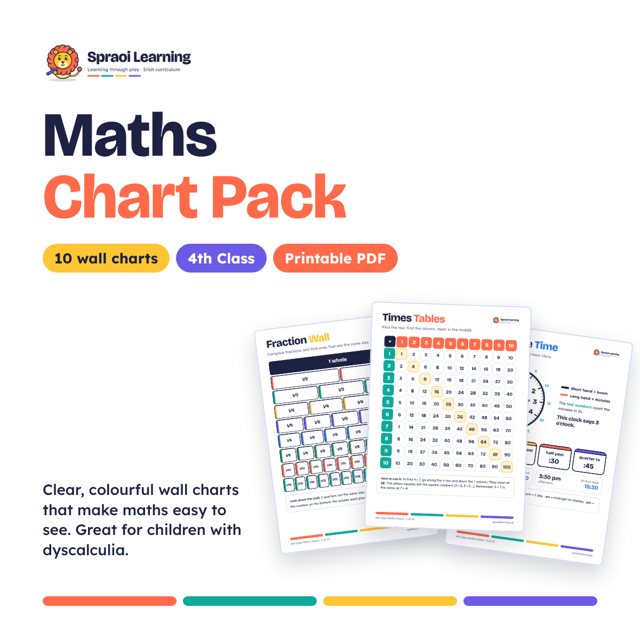
Maths Chart Pack
Times tables, place value, fractions, time, money, shapes and more – clear, colourful and dyscalculia-friendly.
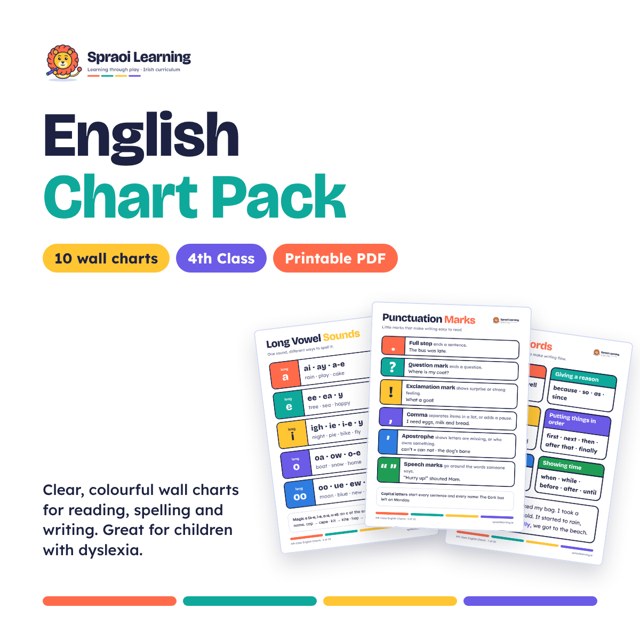
English Chart Pack
Punctuation, parts of speech, spelling rules, homophones, story planning and more – clear, colourful and dyslexia-friendly.
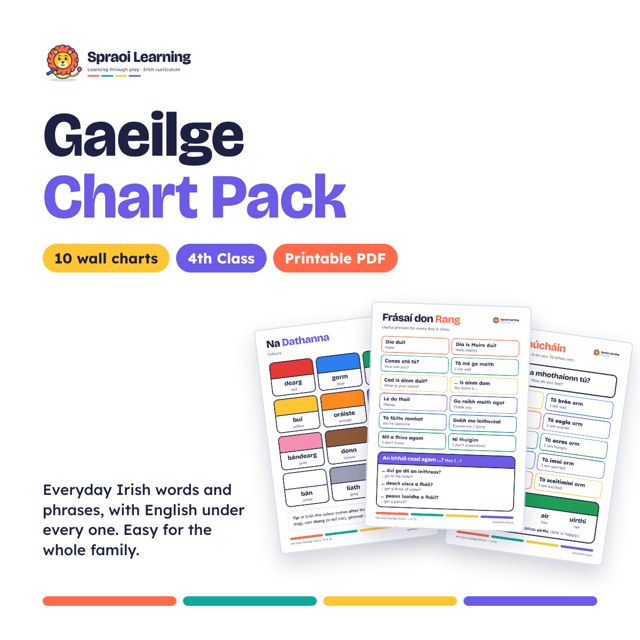
Gaeilge Chart Pack
Phrases, days, months, colours, numbers, weather, feelings and more – with English under every word, so the whole family can help.
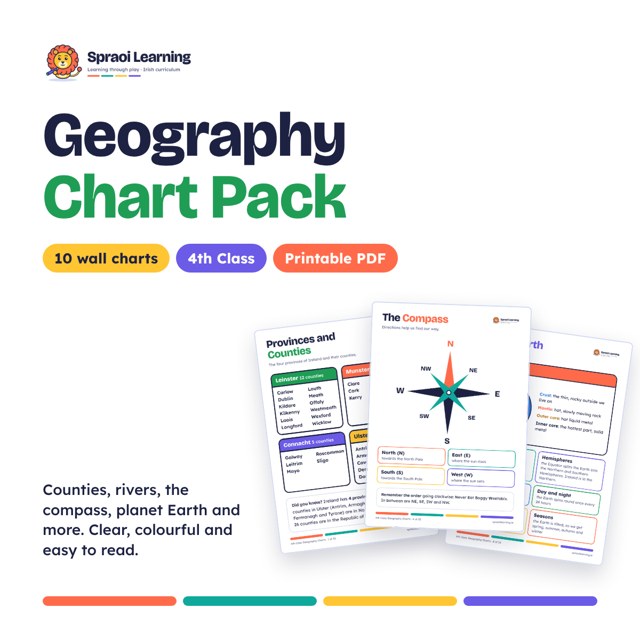
Geography Chart Pack
Counties, rivers and mountains, continents, the compass, map skills, weather, planet Earth and more.
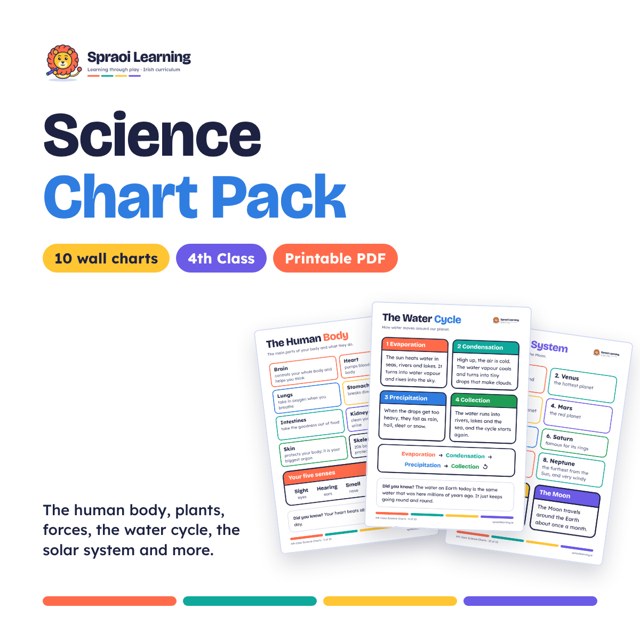
Science Chart Pack
Living things, plants, the human body, materials, forces, electricity, the solar system and more.
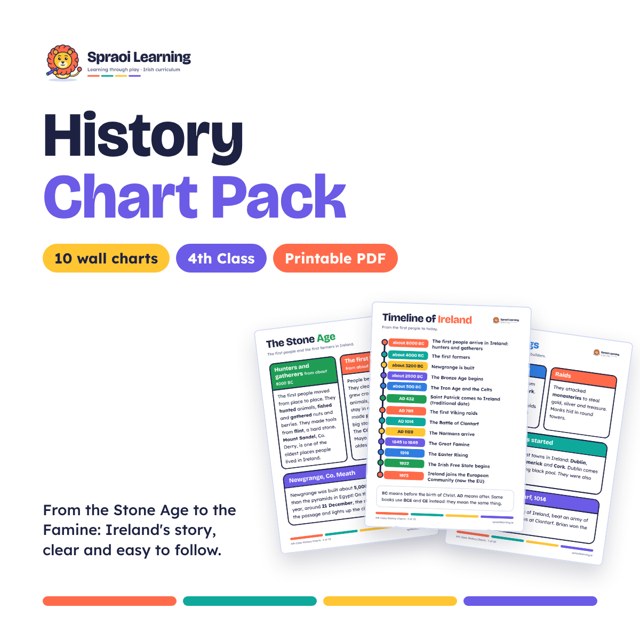
History Chart Pack
Ireland's story from the Stone Age to the Famine: Celts, Saint Patrick, Vikings, Normans and more.
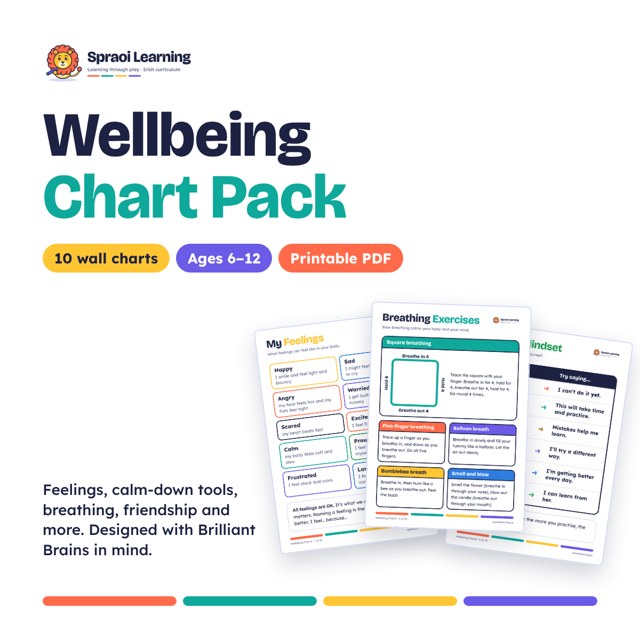
Wellbeing Chart Pack
Feelings, calm-down tools, breathing, friendship, growth mindset, online safety and a kindness challenge.
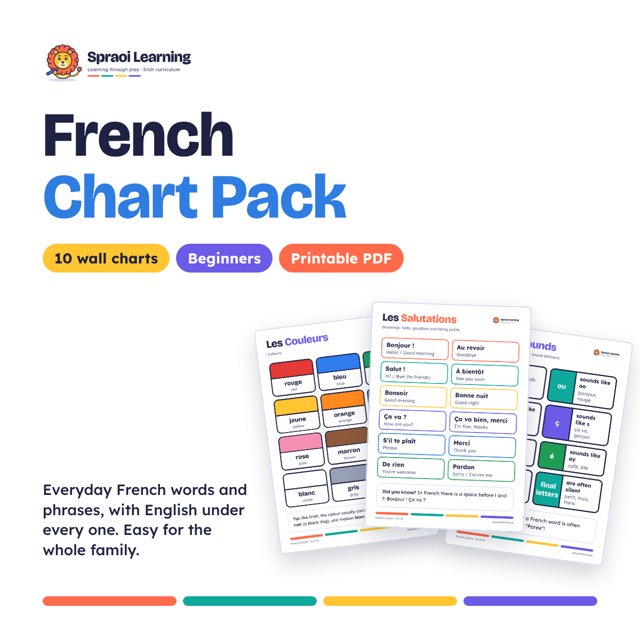
French Chart Pack
Greetings, numbers, colours, family, animals, food, weather and French sounds, with English under every word.
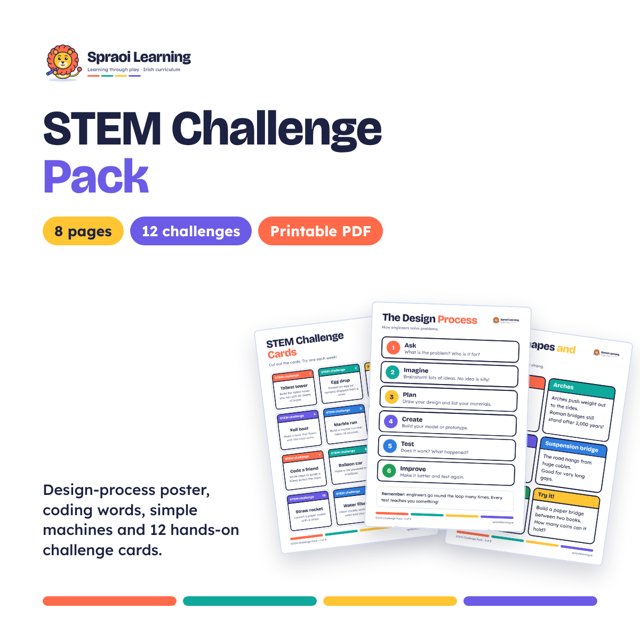
STEM Challenge Pack
Design-process poster, coding words, bridges, simple machines, materials, circuits, 12 hands-on challenge cards and an engineer's notebook.
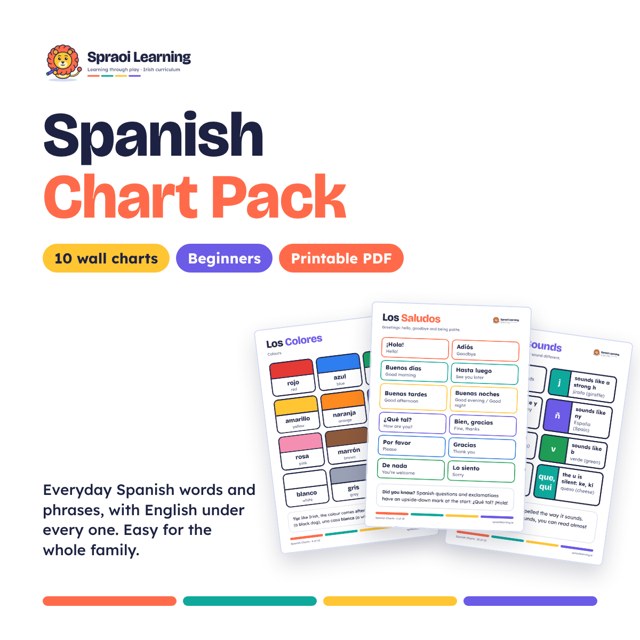
Spanish Chart Pack
Greetings, numbers, colours, days, family, animals, food, weather and Spanish sounds, with English under every word.
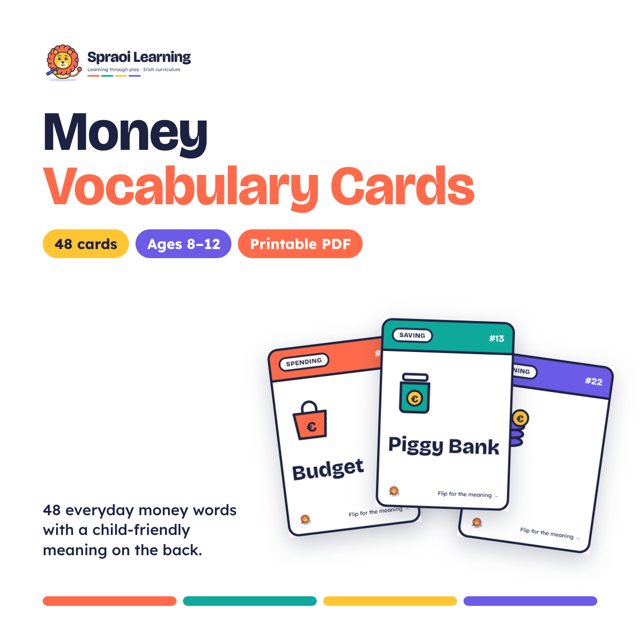
Money Vocabulary Cards
Everyday money words – budget, need, want, wage, balance – with simple meanings on the back.
These tips are general classroom ideas, not a diagnosis or a treatment plan. If you would like more support for a child, your school's special education teacher and the child's parents are your best partners.